
Regenerative Kai: Sourdough.
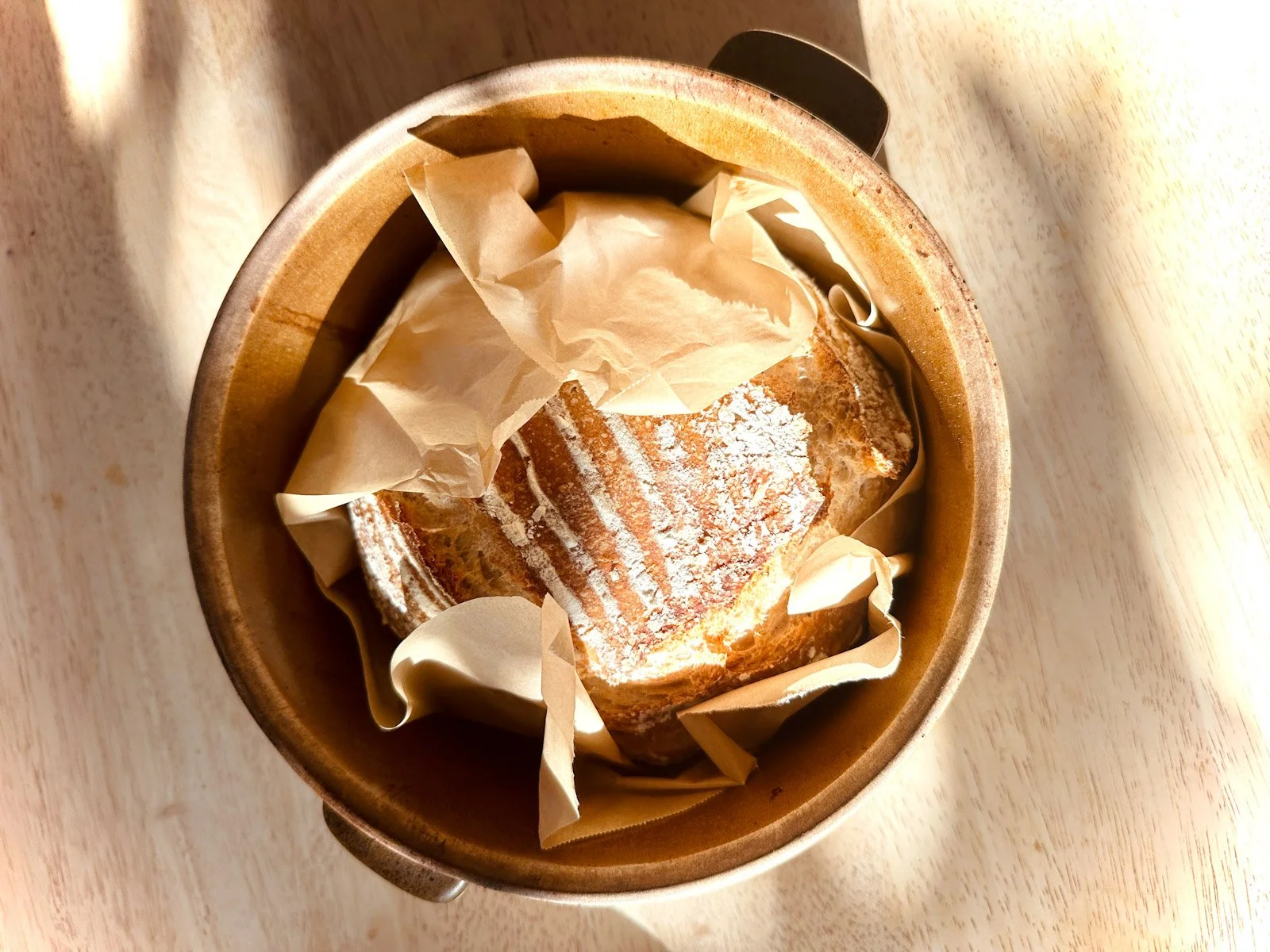
If you’ve been given a new sourdough starter today and are feeling overwhelmed – take a deep breath – there’s only two things you need to do to keep it ‘alive’ today – feed it & discard it.
1. Feeding your starter
In the morning (or as soon as you have time after receiving your new buddy):
If your starter is in a small jar, spoon it into a jar that is about 3 times the size of the starter in it’s current state (to allow room for it to grow)
In a medium bowl, mix 5 tablespoons high‑grade flour with water until it reaches a thick porridge‑like texture
Stir this mixture into your existing starter
Cover the jar with a damp cloth and leave at room temperature.
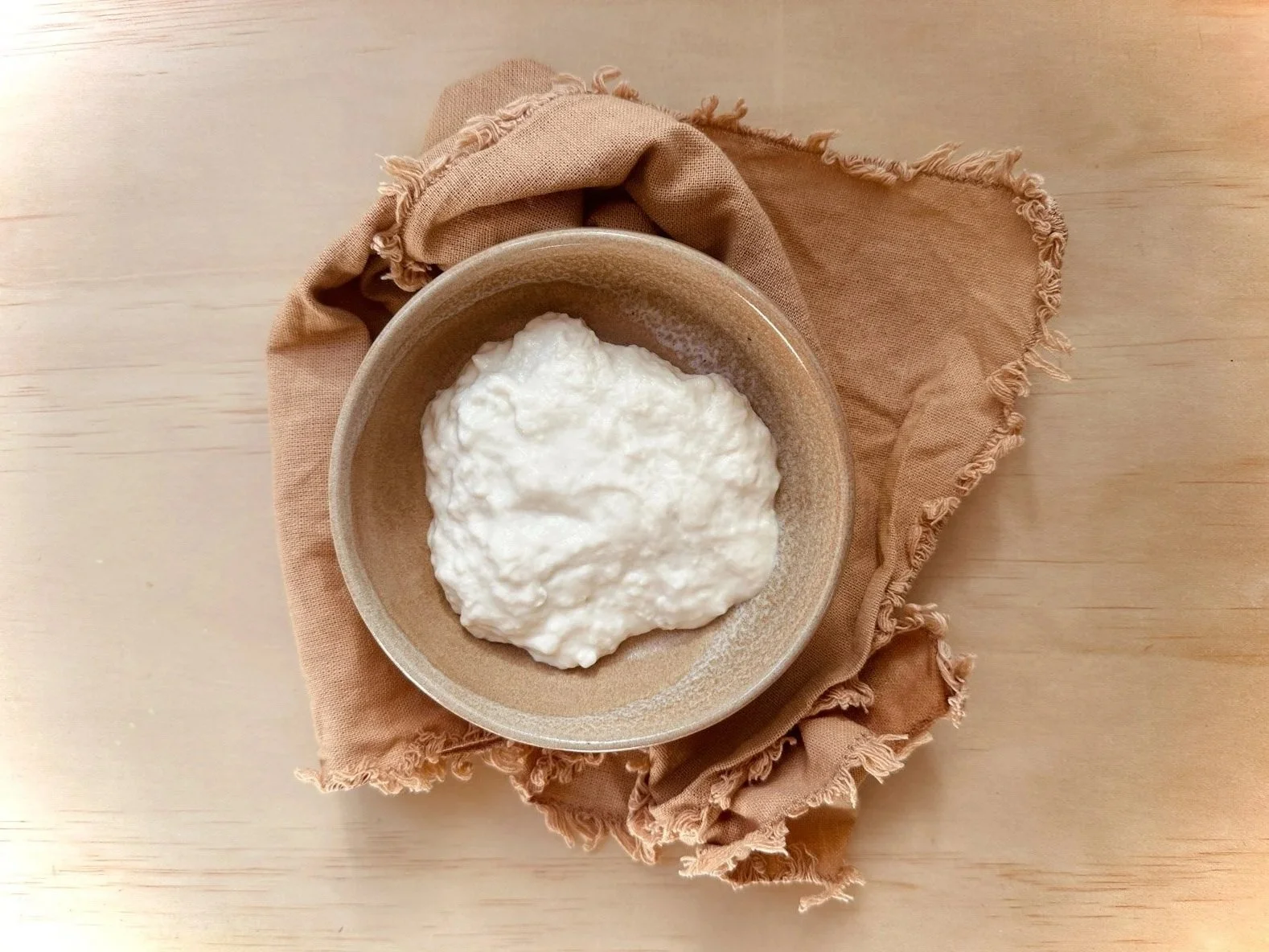
Flour & water mixed together, ready to add to starter jar
2. Discard your starter
About 5-8 hours later, when you can see small bubbles and a gentle lift – the starter is now active.
Discard (spoon out) 5 tbsp of starter and biff it down the sink.
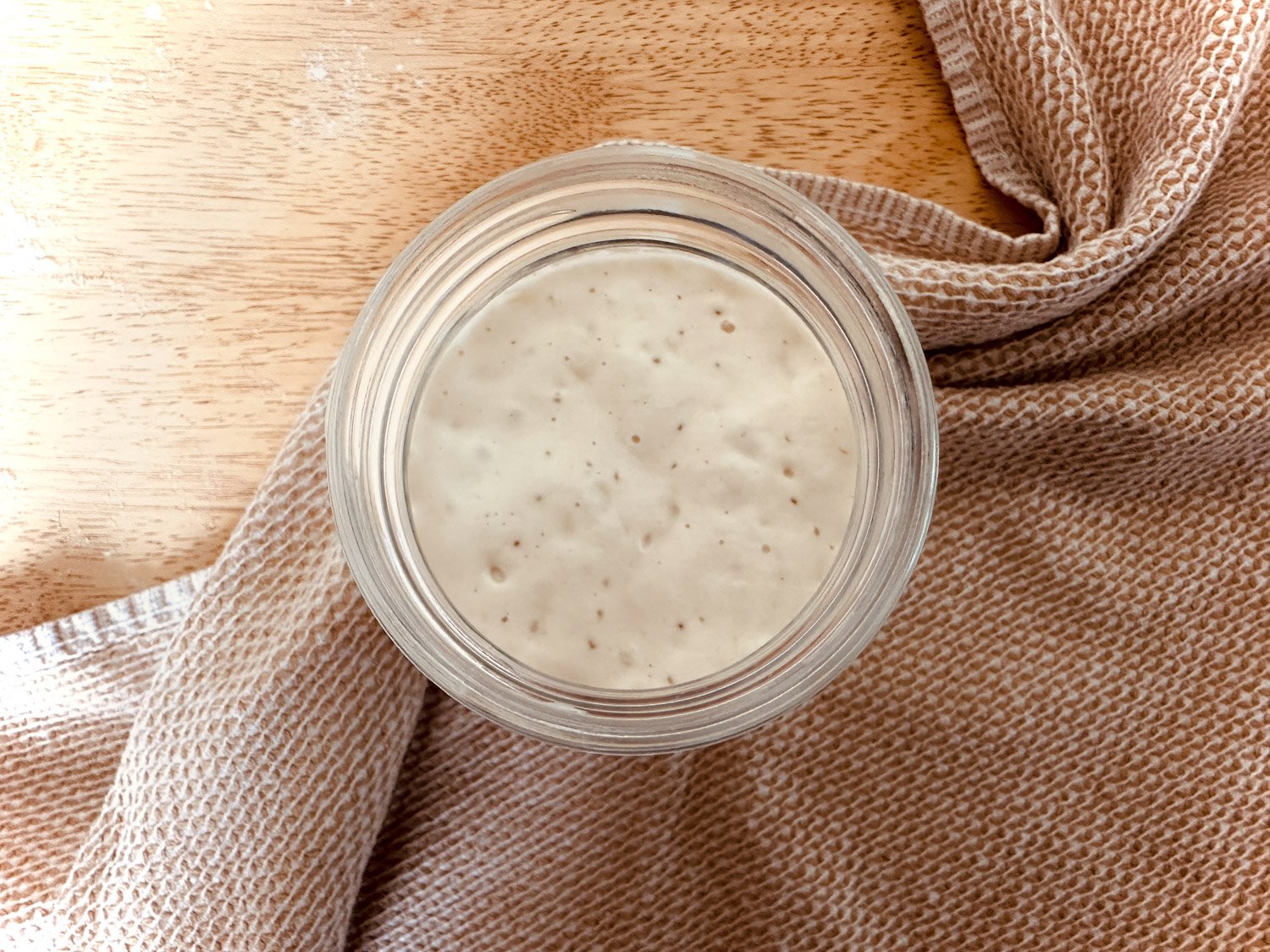
Active starter: ready to discard or use in sourdough
Repeat this process for as many days as necessary before you have time and space to read on and give mixing, baking and sharing a try.
Sourdough is a fermented living culture made from flour and water. It has been cared for, shared, and passed between people for generations – shaped by place, practice, and relationships.
At its heart, sourdough is a regenerative food. It doesn’t get used up. It grows stronger through care and becomes more valuable the more it is shared.
Once you have a starter, you can keep it alive indefinitely – feeding it, baking with it, and passing it on.
Why we love sourdough
Sourdough is made slowly, through fermentation rather than additives. Many people find it gentler to digest and notice steadier energy compared with commercial bread.
You never use a starter once and discard all of it. You take what you need, then feed what remains. The system renews itself through use, care, and time.
Each starter carries a lineage. It reflects the grain, water, climate, and hands that care for it. Every time it is shared, its whakapapa grows – connecting whānau and hāpori (community).
One starter quickly becomes many. A single jar can nourish dozens of households over time. Sourdough is one of the rare things that becomes more abundant the more it is given away.
Making bread at home reduces reliance on packaged food and long supply chains. Once established, a loaf costs around 80 cents to make using simple pantry ingredients.
Sourdough works with natural processes rather than rushing them. It rewards attention and consistency, not perfection. It reminds us that nourishment can be slow, relational, and responsive.
Caring for your starter (and yourself)
Caring for a starter is straightforward.
Feed your starter when it smells mildly sour and looks a little flat.
If you bake often, keep it on the bench and feed daily.
If it’s hot, keep it in a cupboard out of direct sunlight.
If you bake occasionally, keep it in the fridge and feed weekly.
A healthy starter smells fresh and tangy and shows small bubbles.
If it develops mould or an unpleasant smell, discard it and start again.
If you’re ever unsure, it’s OK to let it go. Just contact us or a friend for a replacement.
This sourdough starter is made using wheat flour and contains gluten. While some people find long‑fermented sourdough easier to digest than commercial bread, it is not gluten‑free and is not suitable for people with coeliac disease or severe gluten intolerance. Fermentation reduces some gluten, but it does not remove it entirely.
Step‑by‑step daily rhythm
This process is forgiving and flexible. Sourdough responds more to feel, rhythm, and attention than strict timing.
1. Feeding your starter (just a reminder, you’ve already nailed this)
In a medium bowl, mix 5 tablespoons high‑grade flour and water until it reaches a thick porridge‑like texture
Stir this into your existing starter
Cover with a damp cloth and leave at room temperature until active.
2. Mixing the bread dough
Use your starter once it is active (bubbly and slightly risen), around 5-8 hours later.
In a large bowl, mix:
5 tablespoons active starter
2.75 cups flour
(I use 1.5 cups high‑grade flour, with the remainder wholemeal)1 cup water, adding up to 1.25 cups if needed
Mix until just combined. The dough should feel heavy, soft, and slightly sticky.
Cover and rest for 30 minutes.
3. Salting and first stretch & fold
After resting:
Sprinkle 1 tablespoon fine salt over the dough
Wet your hands, stretch the dough up, then fold it back over itself
Turn the bowl and repeat until the salt is incorporated. (I use fine, pink Himalayan salt so I can see any salty pockets in the dough, but this isn’t essential.)
4. Stretching and folding
Over the next couple of hours:
Perform three more stretch‑and‑folds roughly ever 30 minutes, (or whenever you wander into the kitchen)
There’s no need to overthink this – consistency matters more than precision.
5. Putting the sourdough to bed
In the evening:
Wet hands and shape the dough gently
Place it into either:
A colander lined with a damp tea towel (place the tea towel in the colander, then the sourdough, and fold the tea towel corners over the top) , or
A well‑floured banneton
Cover and place in the fridge overnight
This slow rest develops flavour, structure, and resilience.
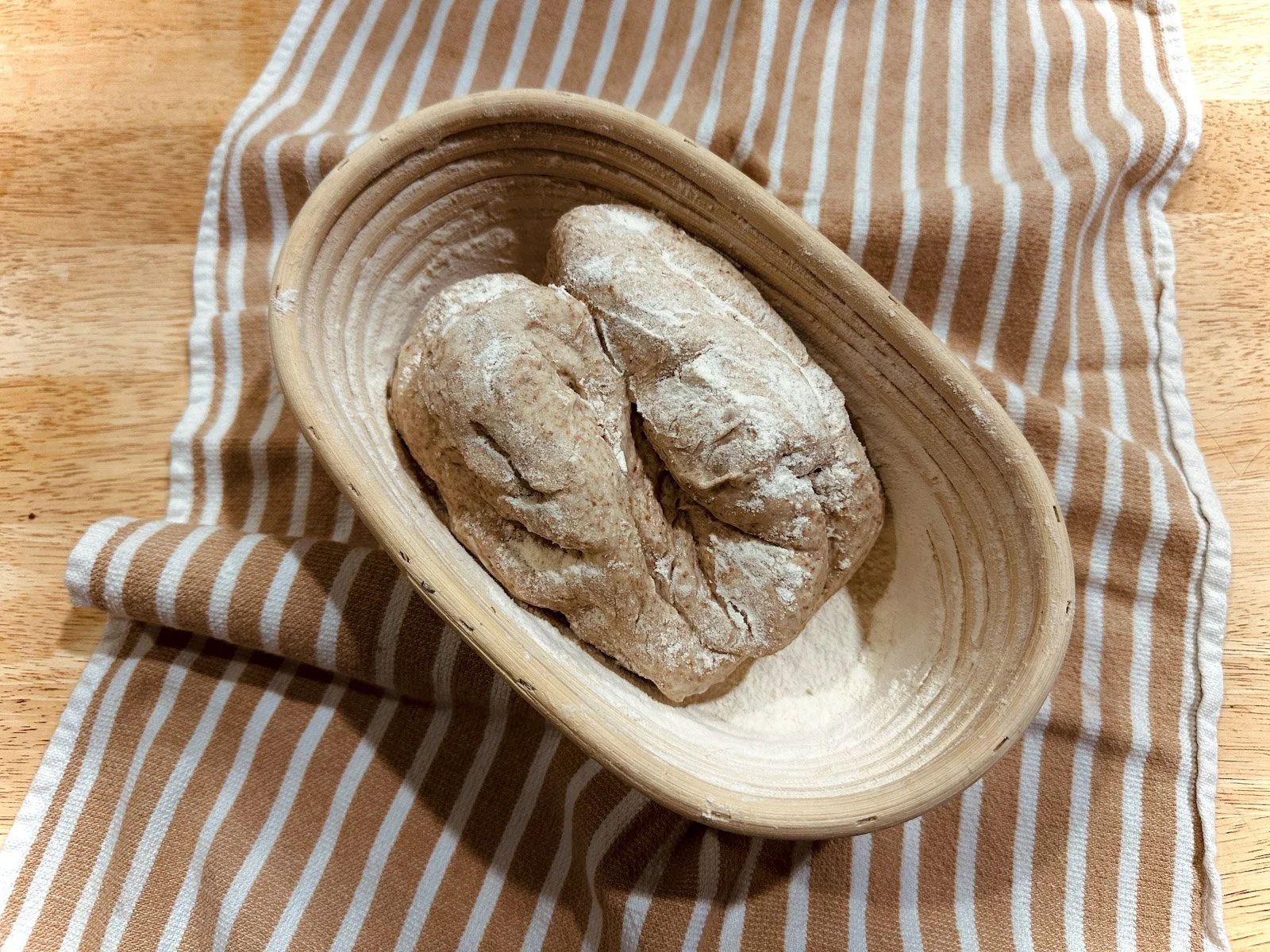
Sourdough, in banneton, ready to be covered with a damp cloth for ‘bed’ (night-night sourdough).
6. Baking in the morning
This process takes 65 minutes, so it pays to turn the oven on first thing if you need to head out the door.
Pre‑heat your oven to 240°C, with a ceramic dish and lid inside
Carefully place the dough into the hot dish and cover with the lid (after trial and error, I place my dough into baking paper, pull the corners together and lift it like a baby carried by a stalk before carefully dropping it into the dish to avoid burning myself).
Bake:
20 minutes at 240°C (lid on)
Reduce to 200°C for 10 minutes (lid on)
Remove lid and bake a further 15 minutes at 200°C
The loaf is ready when deeply golden and sounding hollow when tapped.
7. Enjoy
Let the loaf cool before slicing – if you can.
Eat it fresh, toast it the next day, or share it with someone else.
To share your starter
Feed it first so it is active
Spoon at least 5 tablespoons into a clean jar
Label it clearly: Sourdough starter, Contains gluten (wheat), Not ready to eat – for baking use only, Date shared
Share the care instructions (or the QR code or link to this page)
Encourage the recipient to pass it on once it’s established
You might like to note: Who you received your starter from, Where it came from, Who you pass it on to next
Some people write this on the jar. Others keep a small note at home, or share the story verbally when they gift it. This is how sourdough whakapapa grows.
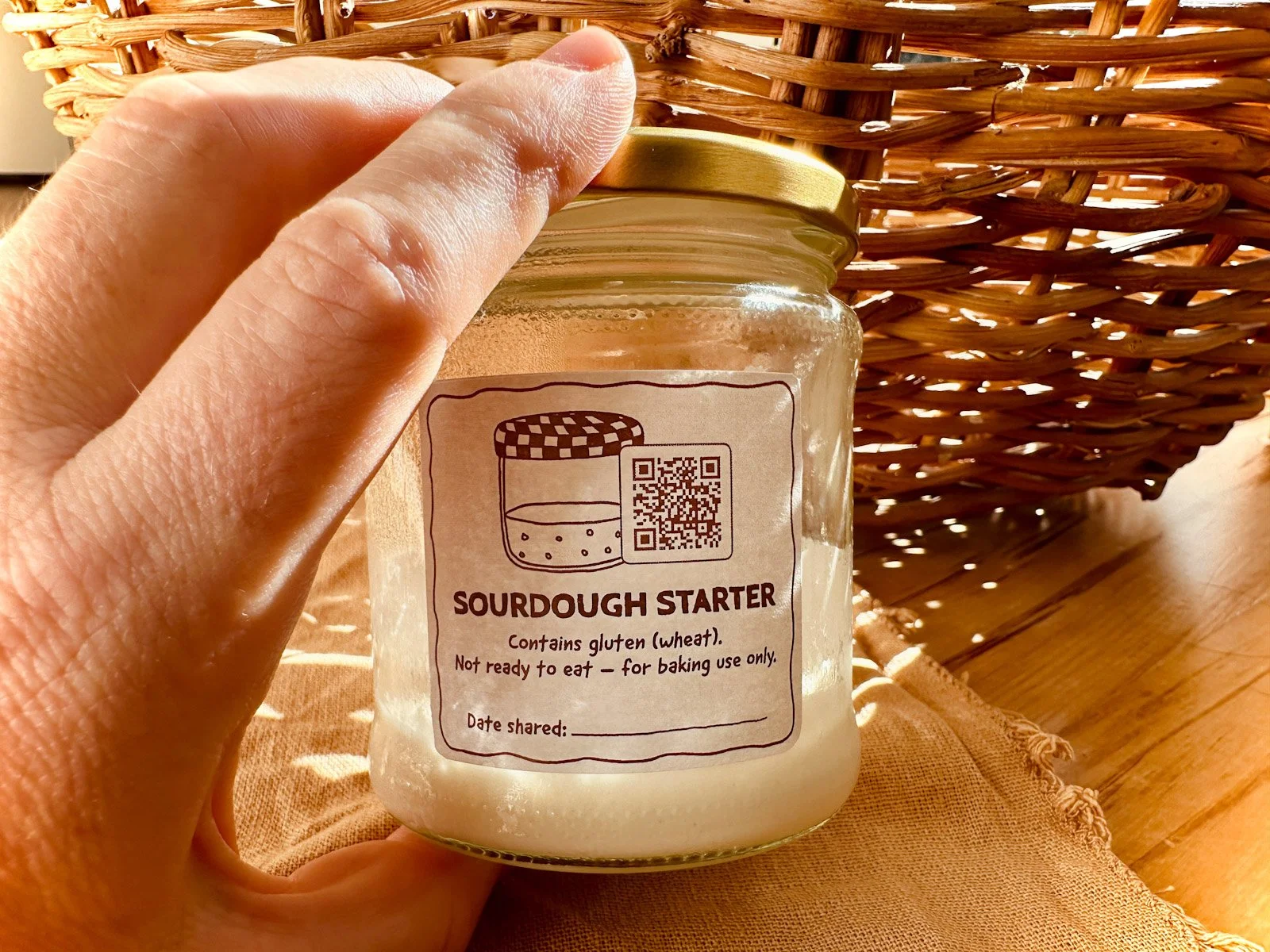
Starter, ready to share
One sunny Sunday morning, I was sent home from visiting my friend Hayley with a freshly baked sourdough and starter in hand. I was excited for the potential and grateful that I could text her when I had questions (there were many). I learned that the starter had been passed down for at least 30 years, originating with our friend Hester’s Mum.
I don’t know what I loved more - being able to make my kids freshly baked bread every day, or reconnecting with busy friends through our group chat ‘Sisterhood of the Travelling Sourdough’.
Thanks Hester’s Mum - and my dear friends for sharing their starter and knowledge with me, and now, with you.
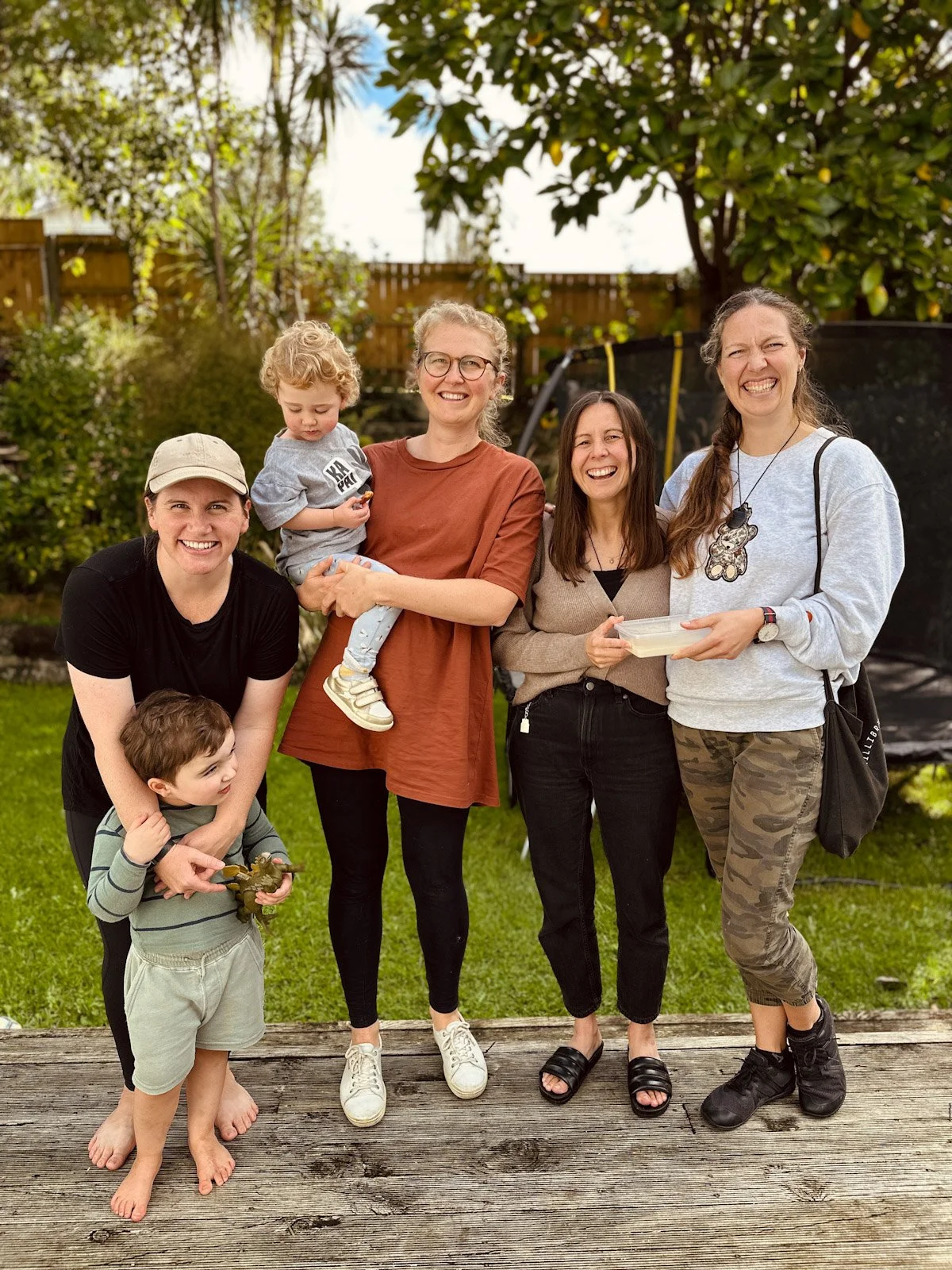
Sisterhood of the Travelling Sourdough: Sam, Hester, Hayley, Jamie - and some of our children, Max, June & baby starter.